Sue's story: Learning to feel safe again
"The unknown is scary."
After years of domestic abuse, Sue had made the decision to leave with her children. But leaving did not mean that the fear disappeared.
There were still so many questions.
Where would they live?
Would her children settle?
Would they finally feel safe?
What would life look like next?
"I needed out," she said. "I needed to feel safe. My children needed to feel safe."
For many people, leaving an abusive relationship is not a single decision. It can take many attempts before someone is able to leave safely and stay away. That was Sue's experience too.
Her story challenges one of the most common questions people ask about domestic abuse: "Why didn't she just leave?"
The reality is rarely that simple. Research from Women's Aid highlights that concerns about safety, children, housing, finances and the risk of further abuse can all make leaving extremely difficult. Many people leave and return several times before leaving permanently.
For Sue, it took years before she was finally able to leave safely with her children. Looking back, she says that her focus was simply on getting through each day.
"I think I was in survival mode. I was just doing the basic stuff as a mum: cooking, cleaning, school runs, making sure we were all in bed on time."
Learning to feel safe again
When Sue and her children arrived at Alongside’s refuge, it was the ordinary things that made the biggest difference.
"The comfort of the flat. The cleanliness. Everything was there that I needed, so I didn't have to worry. If I needed anything, staff were there. I completely forgot to pack towels, and I got towels straight away."
After years of uncertainty, those simple things helped create something that had been missing for a long time: a sense of stability.
Truly feeling safe, however, took much longer.
Although Sue had reached physical safety, recovering from what she and her children had experienced was a gradual process. Over time, moments of safety began to outweigh fear.
"Some days are really, really good. Some days are really, really bad. Some days are really triggering. But when I shut my door at night, I know I’m actually safe. My children are safe.”
As life became calmer, Sue began to notice changes in her children too. One afternoon, while they were walking home from school together, her daughter began opening up about her own experiences.
"My children have been through as much as me. They've seen a lot... That conversation woke me up to what she’d been through."
It made Sue appreciate how much her children had been carrying, even while she had been doing everything she could to protect them. She also began to reflect on what those years of surviving had taken from family life. One memory has stayed with her ever since.
She was praising her daughters for doing well at school when her youngest stopped, looked at her and asked,
"Why are you so happy?"
Sue still remembers what went through her mind. Although she had never stopped loving or caring for her children, she realised how much of her energy had been spent simply helping them get through each day.
"I thought, wow, my daughter has never really seen that joy in my face. I was still being a mum, but I wasn't a present mum. That's the big eye-opener. I'm present now."
Living with judgement
Sue believes fear of judgement is one of the biggest reasons many women struggle to leave an abusive relationship. She says people often have expectations about what someone experiencing abuse should do, without understanding how complicated their situation can be.
"I think everybody has been brought up with certain expectations. People judging. I think that stops a lot of people from leaving. And it doesn’t just come from strangers; family and friends can do it too. That's sometimes worse."
She also believes many people still misunderstand what domestic abuse can look like.
"People don't always understand what's happening. Domestic abuse isn't always physical. It's psychological. It's emotional. People aren't always believed."
Looking ahead
Sue is also honest about the guilt she carried after leaving.
"I am ashamed of putting my kids through that. But I know it's not my fault. I just wish I was stronger than I am now. But at that time, I did the best I could."
Today, Sue is continuing to rebuild her life with her children. Recovery has not been easy, but she can now see how far they have come.
When asked what she would say to another woman who may be thinking about asking for help, she does not hesitate.
"Just pick up that phone and ask for help. I promise you it's the best thing you'll ever do. It might take one time. It might take ten times. But each time you'll get stronger.
I was at the lowest of the low and I've got to where I've needed to be. I'm on a path. My children are happy. I'm happy. I'm empowered."
As she reflects on everything she has learned, she leaves one final message.
"Just be yourself and love yourself. Learn who you are.
You get so much taken away from you. From your childhood. From your life. They take every bit of trauma you've had and use it against you.
But I promise you, once you start loving yourself, things fall into place. Things really do. Your children are happy. You're happy. That is where it starts.
I'm still getting there. I'm still trying every day."
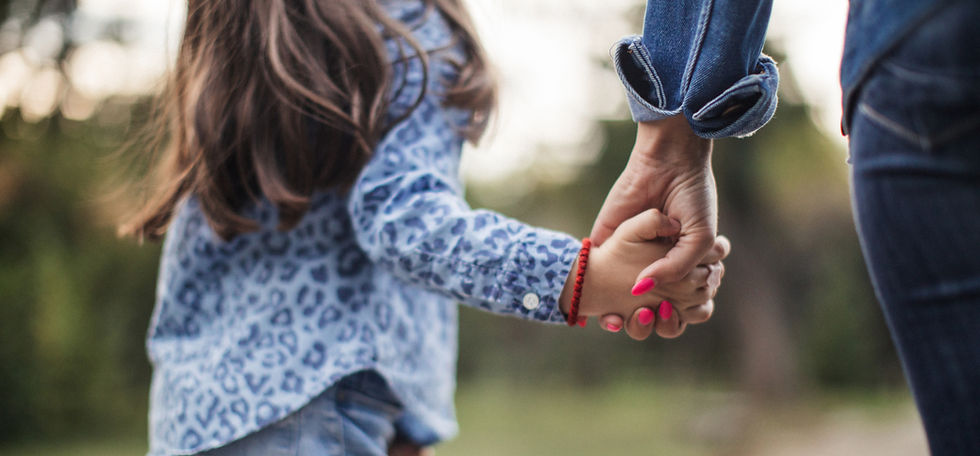
Sue's name has been changed to protect her privacy. The image used is for illustrative purposes only.